
Kino Climates   

Kino Climates: Towards An Ecology in Film Exhibition

Katia Rossini

How is cinema doing in your country? How do you know it is healthy? By the number of films that have been produced? Statistics certainly prove that the number of films produced globally is growing. And a rich programme like the one presented here in Rotterdam certainly confirms the vitality of cinematographic creation worldwide.

Yet, like with many other cultural fields, the current overproduction in film making doesn’t necessarily represent a positive factor. Actually, the film industry is experiencing a paradoxical phenomenon: only a slight percentage of this growing production finds its way to distribution and access to cinema screens, the market being unable to absorb this film ‘overflow’. Thus, the way films are programmed is also distorted: films are queuing up waiting to be released, and their life span on cinema screens gets shorter and shorter as the turnover of films in theatres becomes more frantic.

As a consequence, some of the major stakes for film making today and in the near future lie in the exhibition sector. Too often considered the last link in the film production chain, film exhibition has been neglected for a long time, and finds itself strongly bipolarized these days with multiplexes on one hand and theatres labelled as ‘art cinemas’ on the other hand. One could conclude there is nothing in between…. Now, this in-between area is exactly where we find those cinemas we call ‘alternative’ or ‘independent’. These often unclassifiable venues certainly constitute an interesting, and underestimated, alternative to commercial or more traditional cinemas.

During the 80s and 90s, a large number of art cinemas had to close down. Recently, though, we have observed a resurgence in alternative and micro-cinema spaces; projects that had often started with very modest budgets, compensated by lots of ingenuity and sometimes established in absolutely improbable and unique places.

These independent cinemas are contributing to the diversification of the cinematographic landscape. For instance, these are the venues which might dare to programme films that regular distributors judge ‘risky’ (because they are either too difficult or too fragile). If it weren’t for these cinemas that are not subjected to the strains or
pressures in terms of immediate profitability, a great number of films would only be seen thanks to the film festival network. It has to be said that film festivals have proliferated to such an extent that they have often become the primary option available for the circulation of non–commercial, low-budget, art house types of films. Due to their current increased influence, it was necessary that a major festival raised the issue of what is the future for the alternative film exhibition circuit.

The International Film Festival Rotterdam, in collaboration with Brussels-based Nova cinema, is therefore hosting Kino Climates, a meeting that will attempt to provide an overview of the independent film exhibition scene in Europe today. It will also take a quick glance at the situations in China and Russia. For the very first time, more than thirty venues and organizations will gather, not only to exchange information but also in order to create a network. Kino Climates will be articulated in three parts: discussion panels, conferences and screenings. Several activities will also be accessible to visitors of the Festival whether they work in the industry or not.

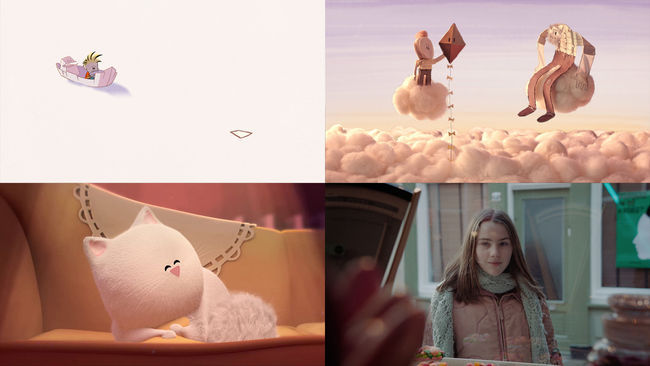
During three consecutive afternoons you will be invited to a series of ten short-conferences, ironically titled, ‘How to save the film world in ten easy steps’. In the evening, Kino Climates will present four programmes, mixing short films and performances. These programmes have been put together with the complicity of all the cinemas participating in Kino Climates. Hopefully they will reflect the diversity and the eclecticism of these cinemas.

Kino Climates will also highlight the work of two artists: Pascal Baes, who is an unparalleled master of the stop-motion technique and whose main work consists of exploring what a 24th of an image can reveal, and multi-media artist Greg Pope, founder of Situation Cinema in the 80s and then Loophole Cinema, a performance group that certainly left its marks on the British experimental cinema of the 90s. He will be accompanied by Mike Cooper, an international music explorer and performer. We certainly are at the dawn of a new era, with digital cinema becoming more established and 3D making a fresh comeback. In this new context, independent cinema still has a very important role to play, and Kino Climates will hopefully bring new perspectives on how film distribution and exhibition could positively be modulated.

Let’s hope that in the future there will be more empathy between the film festival circuit and the independent cinemas network. This is time for a Kino Climates summit!

Ten Conversations to Know How the Film Planet is Doing
Moderator: Chris Keulemans.

Sunday 31th
2:00 pm Learn the Basics: On digital distribution for auteur and independent cinema. (With Teun Hilte/Content Republic)
2:30 pm: Publish Yourself: On how to get press coverage for Independent Films and film programmes. (With Loe Soesanto/InRocktibles)
3:00 pm: From Grain to Pixel: On digitization of film (with Giovanna Fossati, Dutch Filmmuseum)

Monday 1st
2:00 pm: Festival versus Cinemas: Are filmfestivals outshining cinema’s? Toronto: a case study (with Pervence Beurier)
2:30 pm: Go East: The independent film scene in China (with Zhang Yaxuan)
3:00 pm: Go East: The independent film scene in Russia (With Cine Fantom)

Tuesday 2nd
2:00
pm: Become a European: “Europa Cinema” network, pro and contra (with Ian Christie, Professor at the University of London, Vice-president of Europa Cinema)
3:00 pm:
-Traditional distribution versus new modes of distribution
-The industry versus the alternative film circuit

Schouwburg: Kleine Zaal.
Free entrance.
Collaborating film venues
WORM Rotterdam/ NL, Smart Project Space Amsterdam/ NL, Extrapool Nijmegen/ NL, Cinema Nova Brussels/ B, Off Off Cinema Ghent/ B, Cercle des cinés Liège/ B, Gran Lux Saint Etienne/ F, Polygone étoilé Marseille/ F, Le Dietrich Poitiers/ F, L’hybride Lille F, Cube Bristol/ UK, Horse Hospital London/ UK, Side Cinema Newcastle upon Tyne/ UK, Star and Shadow cinema Newcastle/ UK, 7inch cinema Birmingham/ UK, Station 16 Copenhagen/ DK, B Movie Hamburg, D, Kino im Sprengel Hannover/ D, Werkstatt Kino München/ D, Regenboken kino Berlin/ D, Babylon Cinema Berlin, D, Kino Krokodil Berlin/ D, Brotfabrik Berlin/ D, Filmclub 813 Köln / D, Skalvija Film Centre Vilnius/ LT, Kino Pasaka Vilnius/ LT, Cinema Oblo Lausanne/ CH, Cinéma Spoutnik Genève/ CH, Lichtspiel Bern/ CH, La Enana Marron Madrid/ ES, XCÈNTRIC, Cinema of CCCB Barcelona/ ES, Oporto Lisboa/ P, Cinema Detour Roma/ I, Napoli Monitor Napoli/ I, Kino.Lab Warszawa/ PL, Docuart Budapest/ HU, Kino Aero Prague/ CZ, Kino 35 Prague/ CZ, Akademski Filmski Centar Novi Beograd/ RS, DokuKino Zagreb/ HR, Mini-Cine Seydisfjordur/ IS, Kino Cine Phantom Moscow/ RU, Light Industry New York/ US, Uplink Tokyo/ J